University of Luxembourg
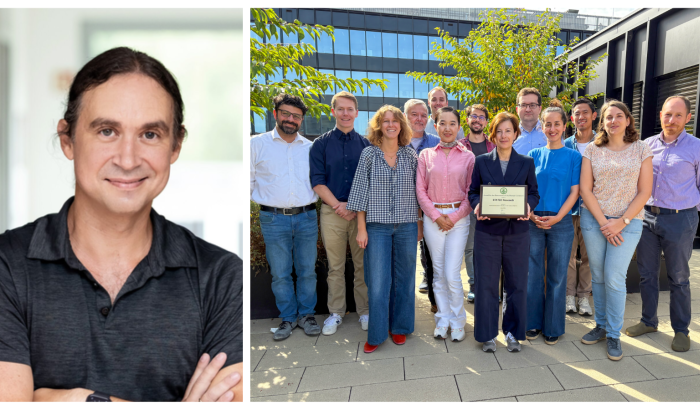
Left: Prof. Michael Heneka, LCSB; middle: Prof. Ivana Nikić-Spiegel, LCSB; right: Prof. Alexander Skupin, LCSB
Today, Karl Deisseroth, Peter Hegemann and Georg Nagel were awarded the 2026 Nobel Prize for their discovery of a molecular switch for nerve cells. The scientists laid the foundation for a method called optogenetics, which uses light to turn on individual nerve cells or neural circuits in a living brain. The story starts with a light-sensitive protein called channelrhodopsin, which Hegemann and Nagel found in algae. Deisseroth then turned it into a precise, light-controlled switch for nerve cells. This tool is used today by researchers worldwide to study the types of nerve cells that are involved in various psychiatric and neurological disorders, and more generally to understand how the brain forms memories, feelings and behaviours.
With around 90 billion nerve cells, an adult brain is a highly complex organ. Each nerve cell forms thousands of connections with other nerve cells. Optogenetics has let researchers pinpoint the specific nerve cells behind functions such as pain, thirst, appetite, reward, social behaviour, circadian rhythm and fever. It has even revealed links beyond the brain, such as how a harder-working heart can intensify anxiety.
Optogenetics is now also beginning to move into medicine: early clinical trials have restored some vision in a blind person with the disease retinitis pigmentosa. And researchers hope the approach could also make cochlear implants more precise by stimulating the auditory nerve with light instead of electricity.


Illustration of the three scientists that received the Nobel Prize (Niklas Elmehed © Nobel Prize Outreach)
We spoke to scientists from the Luxembourg Center for Systems Biomedicine at the University of Luxembourg about the impact of these discoveries, how they remember them and how it relates to their own research.

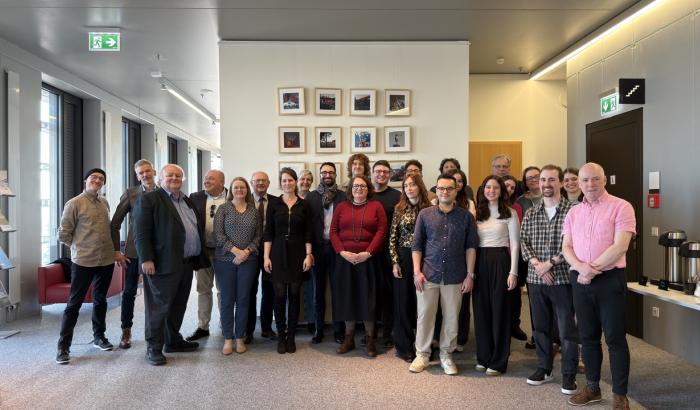
Left: Prof. Michael Heneka, Direktor des Luxembourg Center for Systems Biomedicine (LCSB), University of Luxembourg; middle: Prof. Ivana Nikić-Spiegel, Associate Professor in Translational Neuroscience mit Fokus auf Biological Imaging, also at LCSB; Right: Prof. Alexander Skupin, Professor for Integration and Modelling of Biomedical Data am LCSB.
Short biographies of the scientists
Why is this work important for neuroscience research?
Ivana Nikić-Spiegel: Optogenetics changed the way we can study the brain. It allows us to use light to activate or inhibit specific nerve cells, or neurons, very precisely, both in terms of where and when we do it. So instead of only observing which neurons are active, we can actually control their activity and ask what role they play in different processes, such as movement, learning or memory, both in the healthy brain and in disease.
Alexander Skupin: I think the Nobel Prize is very well deserved, because channelrhodopsin really is such a key molecule that now enables us to better understand how the brain works by triggering specific types of nerve cells. This now allows us to look at the highly complex neural network we have in the brain and see what happens when we switch certain neurons on and off – where else does the light then come on? It is an extremely important tool that enables us to understand how neural connections interact with one another and how the brain is organised.
Michael Heneka: The Nobel Prize is well deserved. The findings of scientists including Deisseroth date back several years now. It has now become clear that this technique can also be put to good use. I believe we have not yet fully exploited the potential of these findings. If we look back a little, we have gathered a great deal of information about the brain over the last 100 years by examining fixed brain tissue – ever since it became possible to look through a microscope. But I believe that these functional changes in the brain functions of individual populations – and eventually also in groups – will enable us not only to understand the human brain very specifically in terms of its physiological function, but also to distinguish pathophysiological processes more clearly from one another; and that this distinction may then pave the way for finding therapeutic interventions.
What do you particularly like about this Nobel Prize story?
Ivana Nikić-Spiegel: What I really like about this story is that it started with curiosity and a very simple question: how does an alga respond to light and move towards it? Researchers discovered light-sensitive ion channels—proteins that respond to light and control the flow of ions into and out of cells. Nobody was trying to develop a tool for neuroscience at the time, but these channels eventually became the basis for optogenetics. It reminds me of the story of GFP, the green fluorescent protein, another Nobel Prize-winning discovery. That also started with curiosity about a natural phenomenon: why a jellyfish glows. It eventually became an incredibly powerful tool for biology and neuroscience.
And now we are seeing another interesting step, with researchers exploring therapeutic applications of optogenetics. So we have this fascinating journey from a very fundamental question about how an alga responds to light, to a powerful tool for neuroscience, and potentially even to new ways of treating disease. For me, this is a beautiful example of why curiosity-driven fundamental research is so important. You really cannot predict where a discovery will lead.

Ion channels are tiny gates in the outer membrane of a nerve cell. They control the movement of electrically charged particles—called ions—into and out of the cell.
When these gates open or close, they change the electrical charge inside the nerve cell. This allows the cell to:
- create an electrical signal,
- pass the signal along the nerve fibre,
- and communicate with other cells.
Different ion channels respond to different triggers, such as a change in voltage, a chemical messenger, or light. In simple terms, ion channels act like switches that help nerve cells turn electrical activity on and off.
This infobox was written with the help of claude.ai and verified by Michèle Weber, PhD (Science Communicator at the FNR).
Alexander Skupin: As well as its medical significance, this is yet another clear endorsement of basic research and interdisciplinarity. Green algae are not necessarily the first thing that springs to mind when one thinks of the brain. However, the fact that research into green algae has shed light on how perception works – the ‘eye’, as it is sometimes called – and is now having a major impact on how we can better understand the brain. This interdisciplinary approach to science enables us to find new avenues of research.

The alga Chlamydomonas senses light using its eyespot. When light is sufficiently strong, it swims towards the source. © The Nobel Committee for Physiology or Medicine. Ill. Mattias Karlén
Michael Heneka: Even in Germany, there are still not that many laboratories using this technique, because it is difficult and time-consuming. I am therefore delighted, on behalf of German science, that two of the Nobel laureates are from Germany.
Do you have any personal memories of the Nobel Laureates or their work?
Alexander Skupin: I started my PhD at Humboldt University in Berlin in 2004, and it was just at that time that Peter Hegemann, one of the Nobel Laureates, joined the university. He had only just discovered channelrhodopsin. And as I came from a physics background, it was all very exciting for me back then – how things work in biology with genes and so on. For me, Peter Hegemann was a great example of how a physics-based approach can be used to understand biological systems. That fascinated and influenced me greatly even back then.
I then moved from computational neuroscience to biophysics because I wanted to understand the brain. And it was fascinating to see that you can learn something from green algae that you can subsequently observe in the brain at some point – for me, it was a real eye-opener to interdisciplinary science, which then motivated me to undertake my first postdoc working on these green algae.
Ivana Nikić-Spiegel: I started my PhD in neuroscience just as optogenetics was emerging. Some of the first key papers had just been published, and others followed during the first years of my PhD. So I have seen the field develop from its beginnings into one of the major tools in neuroscience today. Seeing a new technology emerge and change what was possible in neuroscience has also been very inspiring for me, especially because I have always been interested in developing and using new molecular tools.
How is your own work related to the topic of the Nobel Prize?
Michael Heneka: In my research group, we use optogenetics to analyse individual groups of neurons and their function in the brain with high temporal and spatial resolution. We are specifically studying a small region of the brain known as the locus caeruleus. In people with Alzheimer’s disease, this region is damaged particularly early on. We are interested in how other areas of the brain change when we selectively switch this region off and then back on again. To do this, we combine two methods: Using optogenetics, we control the activity of nerve cells using light. At the same time, we use a special microscope (two-photon laser scanning microscope) to observe, in the living brain, how the neocortex – a part of the cerebral cortex – reacts to this. We are investigating this in animal models of Alzheimer’s disease and how nerve cells, immune cells and blood vessels in the neocortex are affected.
Ivana Nikić-Spiegel: Our work is not directly on using light to control neuronal activity, but there are some interesting connections. We also work with ion channels and develop molecular tools to study them, but from a different angle.
We use a method called genetic code expansion, which allows us to introduce specially designed, amino acids at very precise positions in a protein. Amino acids are the building blocks of proteins, and by introducing these special ones, we can give proteins new properties. For example, we can label ion channels with fluorescent dyes and see where they are and how they behave in cells.
Interestingly, some of these special amino acids can also be designed to respond to light. This means that, in principle, we can give a protein the ability to respond to light and then use light to control what it does. This could give us a very precise way to study and control the function of individual proteins.
This is a bit different from classical optogenetics in neuroscience, where specific light-sensitive proteins are introduced into neurons so that their activity can be controlled with light. With our approach, we could potentially make a particular protein light-sensitive and control its function directly. This is something we are very interested in exploring in the future.
So although the approaches are different, they share a similar idea: developing molecular tools that allow us to see, understand and control biological processes with increasing precision.
Alexander Skupin: After my postdoc, I ended up moving from green algae back towards neuroscience. But my fascination with ion channels has stayed with me. What we’re now trying to understand is: how do ion channels actually work? In our research, we’re looking, amongst other things, at ion channels that are driven not by light but by voltage changes in the cell membrane. We’re trying to understand the intramolecular processes that lead to the ion channel opening, and, when various genetic mutations are present, how these lead to gain-of-function or loss-of-function and to various diseases, such as epilepsy, migraine or Parkinson’s.
More infos about the Nobel Prize on the Nobel Prize website.
Questions and editing: Michèle Weber (FNR)
Cet article fait partie d'une série
- 1 / 4 Nobel Prize in Medicine: Reactions from Scientists in Luxembourg En lecture
- 2 / 4 Prix Nobel de physique: Réaction d’un astrophysicien du Luxembourg Lire
- 3 / 4 Nobelpreis Chemie 2026: Antworten auf ein Jahrhundert altes chemisches Rätsel Lire
- 4 / 4 Research in Luxembourg on the topic of the Nobel Prize in Economics Lire